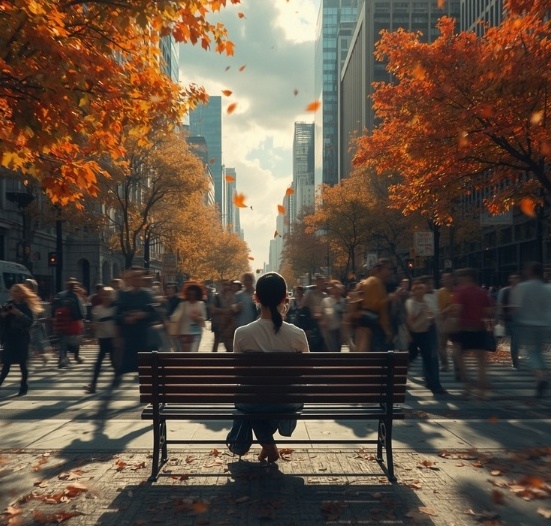
There has been a noticeable rise in organised social experiences over the past few years. Run clubs. Supper clubs. Walking groups. Games nights. Offline events. Book clubs. Communal dining. Even the return of interest in analogue hobbies that many people once considered outdated.
At first glance, much of it looks like trend culture. Another cycle of aesthetics and lifestyle branding. But underneath it is something more revealing about the way people are now living.
Modern life has become highly effective at reducing friction. Food arrives without speaking to anyone. Entertainment streams endlessly. Work happens remotely. Shopping is immediate. Messages can be answered later. Entire weekends can pass without requiring very much from us at all.
For many people, life has become remarkably manageable alone. Lockdown accelerated this, but it did not create it. It simply pushed existing patterns further. People adapted to smaller routines, fewer interactions and more controlled environments. And in many ways, that adaptation worked.
A lot of people discovered they liked its predictability. The reduced social pressure. The absence of obligation. The ability to control access to themselves more carefully.
What emerged afterwards was not necessarily isolation in the traditional sense. Most people are still constantly connected to others. There are group chats, voice notes, social feeds, work calls, and endless passive forms of contact. People often know what is happening in each other's lives without having spoken properly in weeks.
Being socially updated is not the same thing as feeling connected.
At the same time, the language of protecting peace, preserving energy and maintaining boundaries has become deeply embedded in modern culture. Some of that has been healthy. Not every demand on a person deserves their attention. Not every relationship should survive indefinitely out of guilt or habit alone.
But there is also a point where a life can become too optimised around emotional self-protection. Too managed. Too controlled. Too efficient.
Many people now live inside carefully constructed systems of organised connection. Social plans are scheduled weeks ahead. Messages are responded to selectively. Time alone is treated as recovery. Spontaneity is increasingly viewed as an interruption.
Humans have historically built closeness through repetition and proximity more than intention. Seeing the same people regularly. Running into each other. Sitting around after things ended. Small interactions that were never important enough to schedule formally, but mattered anyway. Modern life has stripped out many of those accidental points of contact.
A run club is rarely just about running. A supper club is rarely just about food. Much of what people are looking for is permission to be around other people without needing a reason beyond that. These environments are rebuilding forms of social connection that used to happen naturally.
They are not simply trends. They are evidence of people trying to restore forms of interaction that convenience, efficiency and hyper-independence have gradually pushed to the edges of modern life.
But the same instinct that is driving people toward these spaces may also be what made them necessary in the first place.
Subscribe to stay connected.
New series and updates delivered directly to you.