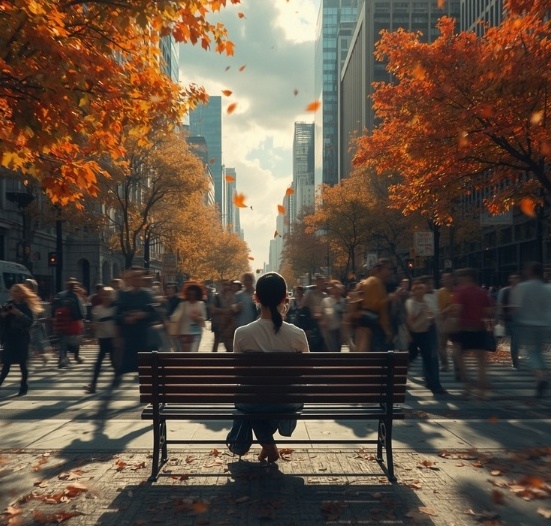
The appetite for these new social spaces makes more sense when you look at what people are moving away from.
People are spending more time at home again. Weekends are being protected more carefully. Plans are declined more easily. Social circles are becoming smaller and more selective. Many people have become far more deliberate about who gets access to their time, attention and emotional energy.
Most of this is framed positively. Better boundaries. More balance. A healthier relationship with time and attention. And some of it probably is.
The pace and texture of life has changed dramatically over the past decade. Work follows people home through their phones. News cycles are relentless. Social expectations rarely switch off completely. People are permanently reachable, permanently informed and often mentally occupied long after the day is supposed to have ended.
Against that backdrop, it makes sense that many people have started organising their lives around forms of self-preservation. Not dramatically. Gradually.
People simplify where they can. They reduce unnecessary obligations. They become more selective socially. Home starts to feel less like somewhere to return to at the end of the day and more like insulation from the pace of everything outside it.
Not smaller in any obvious sense. More controlled.
At the same time, it is worth noticing how much life now revolves around minimising disruption. Convenience has become one of the defining principles of adulthood. Food arrives at the door. Entertainment streams endlessly. Shopping takes minutes. Conversations can be delayed indefinitely. Entire days can pass with very little unpredictability built into them at all.
But there is also a point where a life organised entirely around recovery starts becoming narrower without a person fully noticing it happening. Spontaneity disappears first. Then, casual social interaction. Then, the sort of low-level dependence people once had on each other without thinking too much about it. Asking favours. Dropping by. Sitting together without plans or purpose. Being involved in each other's lives in ways that were ordinary rather than highly scheduled.
What replaces it is often more structured and more managed. Plans are arranged weeks ahead. Time together is organised around activities. Friendship is maintained through updates rather than shared daily life.
This renewed interest in analogue social experiences and organised in-person communities is probably not accidental. Run clubs, communal dining, games nights, and other forms of structured social interaction continue to grow because they create something many people miss without fully realising they miss it: environments where interaction happens more naturally and where attention is not constantly divided elsewhere.
The question is whether lives built around reducing pressure and protecting energy still leave enough room for the unpredictability, interruption and dependence that most meaningful relationships require.
Subscribe to stay connected.
New series and updates delivered directly to you.